Call Us NowEmail Us Now

Back to All Blogs

blog-authorDavid A. Keller, Esq.

Hero Image

USCIS Processing Times: What They Really Mean and What You Can Do About Delays
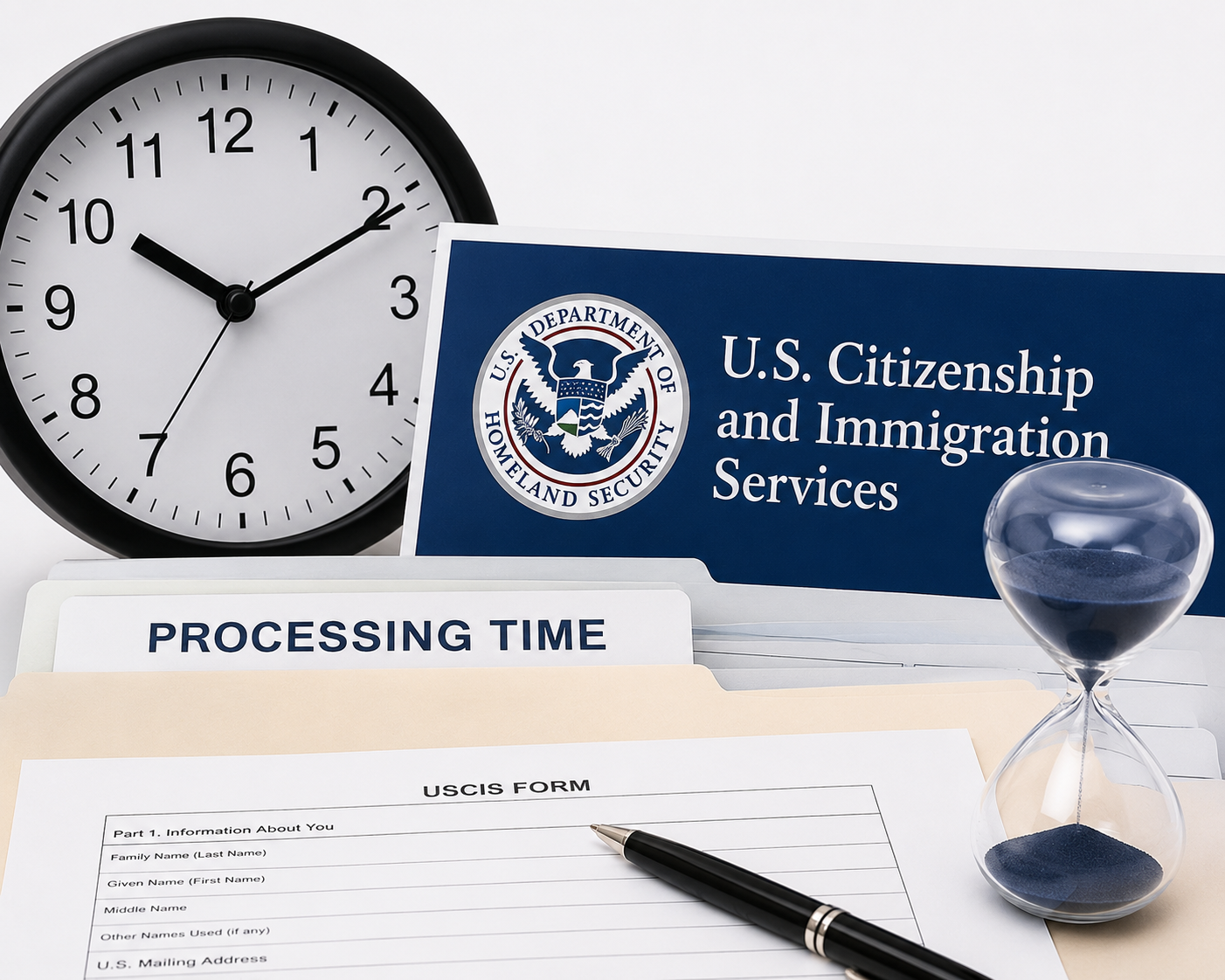
USCIS processing times and immigration delays
The first question almost every immigration applicant asks is simple: “How long will this take?” The honest answer is rarely a single number.

Whether you are waiting on a green card, an interview notice, or a work permit, the uncertainty is stressful — and in marriage-based and family cases, jobs, travel, and reunification plans often depend on the timing.

USCIS does publish processing estimates, but those figures are widely misread. Taken out of context, they create expectations that do not match reality. Here is what these timelines actually represent, why they vary so much, and what options exist when a case seems stuck.

What USCIS Processing Times Actually Measure

A posted processing time shows how long it took USCIS to finish 80% of completed cases over the previous six months for a specific form, category, and office.

That is a population-level statistic, not a prediction for your file. A real share of cases land outside the posted range — some faster, many slower. In practical terms, an applicant waiting fourteen months on a case with a six-to-twelve-month range is not necessarily caught in an error. They may simply be in the portion of cases that takes longer.

Why Processing Times Vary So Much

Many people assume USCIS works strictly “first in, first out.” It does not. Several factors shape how quickly a case moves:
  • Application type: Different forms follow different workflows and review requirements.
  • Subcategory: A single form can cover very different cases — Form I-485, for example, handles both family and employment filings with different timelines.
  • Office or service center: Workload is spread unevenly across locations.
  • Volume and backlog: Policy changes and staffing shifts cause caseloads to rise and fall.
  • Extra review: Security checks or coordination with other agencies can extend processing.

Two people who file the exact same case on the same day can still end up with very different timelines.

Common Case Types and Their Timelines

Timelines depend heavily on what you filed and how the case is routed:
  • Family-based filings: An approved Form I-130 does not mean a green card is around the corner. Consular cases then move to the National Visa Center for additional steps.
  • Employment-based filings: These often involve multiple agencies — USCIS, the Department of Labor, and the Department of State — each working on its own schedule.
  • Naturalization: Form N-400 timelines vary widely depending on your field office.
  • Related benefits: Work authorization (Form I-765) and travel documents (Form I-131) run on separate clocks that may not line up with the underlying case.

What Can Make a Case Take Longer

Some delays are within your control, and some are not. The most common causes include:
  • Requests for Evidence (RFEs): Processing pauses while you respond, then picks back up.
  • Background and security checks: Most clear routinely, but some require coordination between agencies.
  • Inconsistent records: Discrepancies between forms or supporting documents trigger extra review.
  • High-volume periods: Surges in filings temporarily slow everything down.

A complete, consistent, and well-organized filing is one of the best ways to avoid the delays you can actually prevent.

How Delays Affect Real-Life Plans

Processing times are not just numbers — they ripple into everyday decisions:
  • Work: Employment authorization tied to a pending case can leave gaps if it is not renewed in time.
  • Travel: Some applications limit international travel or require advance parole first.
  • Family: Longer processing directly delays reunification, sometimes through major life events.
  • Long-term planning: Uncertainty makes it harder to commit to housing, jobs, and other major decisions.

How to Check Processing Times the Right Way

To get a meaningful estimate, you have to check the right inputs:
  • Use the correct form number.
  • Confirm the correct category or subcategory.
  • Select the office or service center handling your case.
  • Read the posted range as a typical span — not a deadline or a promise.
  • Compare it against your receipt date.

Skipping any of these steps usually leads to the wrong conclusion about where your case stands.

What to Do If Your Case Seems Outside Normal Processing

It helps to know which situation you are in:
SituationWhat It Usually Means
Within the posted rangeKeep monitoring. Timing still varies case to case, even when everything is normal.
Beyond the posted rangeA formal inquiry may be available. Note that some forms use a 93% completion benchmark rather than 80%.

When a case is genuinely outside the range, options like a USCIS Contact Center inquiry or a congressional inquiry may be appropriate. Being outside the range does not guarantee a fast fix — it simply opens the door to follow-up.

Can Anything Speed a Case Up?

Sometimes, but the options are limited:
  • Premium processing: Available for certain forms (such as some I-129 and I-140 filings) for an additional fee, with a guaranteed action window. Eligibility and fees change often.
  • Expedite requests: USCIS may grant these for severe financial loss, urgent humanitarian reasons, or U.S. government interest. Approval is never guaranteed.

Do not assume either option applies to your case without first confirming eligibility.

Frequently Asked Questions

What does a USCIS processing time actually mean?

It is the time it took USCIS to complete 80% of similar cases over the last six months — a statistic about a group of cases, not a deadline for yours.

Why do similar cases get different timelines?

Office workload, subcategory, extra review, and backlog all affect speed. Two identical filings can move at very different paces.

Are the posted times accurate?

They are a reasonable guide for what is typical, but a meaningful share of cases finish faster or slower than the posted range.

What does “outside normal processing” mean?

It generally means your case has passed the posted range, which may make a formal inquiry available — though that does not guarantee a quick result.

Can I do anything to speed up my case?

Possibly. Premium processing exists for certain forms, and expedite requests may be granted in limited circumstances. Both depend on eligibility you should confirm first.

What should I do if my case is delayed?

Confirm you are reading the correct form, category, and office, compare against your receipt date, and if you are truly past the range, consider an inquiry or speak with an immigration attorney about your options.

Plan Realistically With Keller Law Group

Processing times are a useful framework, but they are not promises. They tell you what is typical for cases like yours — not exactly when your own case will be decided. Workload, complexity, and review requirements mean even identical applicants can have very different experiences.

Understanding what these timelines represent, what causes delays, and which options are realistically available lets you plan with clear eyes instead of false expectations.

If your case feels stuck or you are not sure what your timeline really means, we can help you read it correctly and decide on the right next step.

Schedule a consultation today.
Keller Law Group, LLC
Phone: (857) 810-8040
Email: hello@kellerimmigration.com
Hero Image

About Keller Law Group, LLC

Keller Law Group, LLC specializes in immigration law, criminal defense, and personal injury cases. With a commitment to excellence and personalized service, we are here to guide you through every step of the legal process. Visit www.kellerimmigration.com to learn more

Schedule Your Free Discovery Call

Take the first step toward resolving your legal challenges. Book a friendly meet-and-greet to get to know each other (no legal advice at this stage). However, if you’re ready for tailored guidance, schedule a direct legal consultation instead.
We’re here to support you every step of the way!

Schedule Legal Consultation

Connect With Us on Instagram

swiper-image
swiper-image
swiper-image
swiper-image
swiper-image
swiper-image
swiper-image
swiper-image
swiper-image
swiper-image
swiper-image
swiper-image
swiper-image
swiper-image
swiper-image
iphone
View More

We’re Here to Help

Get in Touch with Us

300 Main Street, 1st Floor Worcester, MA 01608

google-maps-logo
Logo

Monday - Friday | 9AM to 5PM

Saturday | Appointment Only

Sunday | Closed

Disclaimer:

In accordance with rules established by the Supreme Judicial Court of Massachusetts, this site must be labeled “advertising.” It is designed to provide general information for clients and those browsing our firm’s website and should not be construed as legal advice, or legal opinion on any specific facts or circumstances. This website is designed for general information only. The information presented at this site should not be construed to be formal legal advice nor the formation of a lawyer/client relationship.

Icon 1Icon 2Icon 3Icon 4Icon 5Icon 6

Powered by AG InfoTech